
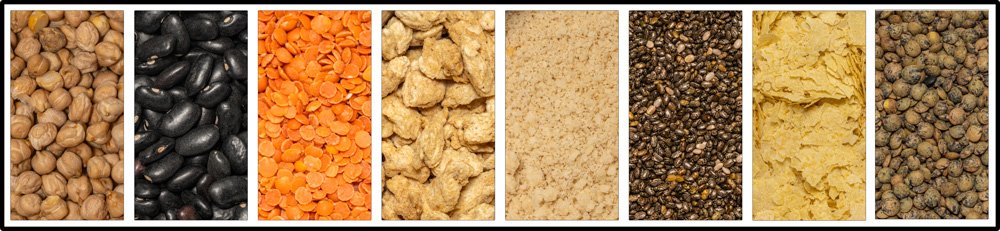
Whether you’re vegan, vegetarian or simply looking to eat more plant-based foods, there are plenty of delicious ways to add protein to your diet. From protein-packed pulses and soya products to seeds, nuts and whole grains, many everyday store cupboard ingredients can make a valuable contribution to your protein intake. But which vegan protein sources contain the most protein? We’ve compared some of the highest-protein products available from Natural Weigh, using their nutritional information per 100g. This makes it easy to see how different foods compare and find new ingredients to add to your meals.
The best vegan protein sources compared
Here’s how some of our most protein-rich plant-based products compare:
| Natural Weigh product | Protein/100g | Complete protein? | Key point |
|---|---|---|---|
| TVP mince (soya) | 52g | ✓ Yes | Soya is a high-quality complete plant protein |
| Nutritional yeast | 47g | ✓ Yes* | Marigold describes Engevita as a complete protein |
| Hemp hearts | 34g | Contains all 9 EAAs | Particularly protein-rich; amino-acid balance matters |
| Red lentils | 25g | No | Excellent protein source; sulphur amino acids are relatively limiting |
| Pumpkin seeds | 24.5g | Not usually classified as complete | Protein-rich, but amino-acid balance is not ideal |
| Puy lentils | 24g | No | Excellent protein source; sulphur amino acids are relatively limiting |
| Black beans | 21.6g | No | Rich in lysine but relatively low in sulphur amino acids |
| Ground almonds | 21.1g | No | Good source of plant protein |
| Pistachios | 21g | No | Good source of plant protein |
| Chia seeds | 20g | Contains all 9 EAAs | Favourable amino-acid profile |
| Linseeds | 20g | No | Lysine is relatively limiting |
| Cashews | 18g | No | Good source of plant protein |
| Sesame seeds | 17.7g | No | Lysine is relatively limiting |
| British quinoa | 12.8g | Often described as complete | Contains all 9 EAAs; amino-acid proportions still matter |
| Porridge oats | 11g | No | Good protein contribution; lysine is relatively limiting |
Which vegan foods are highest in protein?
The clear winner among the products currently available is Organic Textured Vegetable Protein (TVP) mince, with 52g of protein per 100g.
TVP is made from soya and is particularly useful for anyone looking for a substantial plant-based protein source. It can be used in place of minced meat in dishes such as bolognese, chilli, shepherd’s pie and tacos.
Next come some of the concentrated ingredients that are particularly easy to add to meals, including seeds, nutritional yeast and lentils.
Complete protein: does it contain all the essential amino acids?
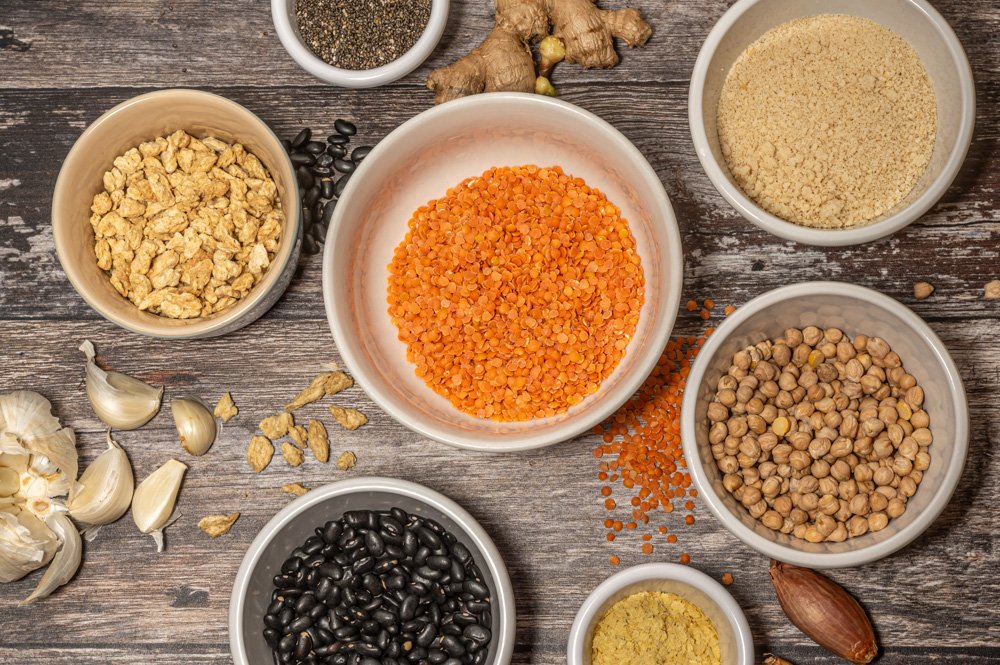
Protein is made up of amino acids, nine of which are essential amino acids (EAAs). Our bodies can’t make these essential amino acids, so we need to obtain them from food.
A protein source is often described as “complete” when it provides all nine essential amino acids in sufficient amounts. However, protein quality is more nuanced than simply checking whether all nine are present. The proportions of each amino acid and how well the protein is digested also matter.
Which plant-based foods contain all nine essential amino acids?
Several of the foods in our comparison contain all nine essential amino acids, including TVP, nutritional yeast, hemp hearts, chia seeds, quinoa, pumpkin seeds, lentils, beans, chickpeas, nuts, seeds and oats.
Some have particularly favourable amino-acid profiles. Soya-based TVP and nutritional yeast are notable examples, while quinoa, chia and hemp are also useful plant-based sources containing all nine essential amino acids.
It’s worth noting that having all nine amino acids present doesn’t necessarily mean that they occur in exactly the same proportions as the reference protein used in nutritional studies. Some plant proteins have a limiting amino acid — the essential amino acid present in the lowest proportion relative to requirements.
For example, lysine can be relatively limiting in some seeds and cereals, while the sulphur-containing amino acids methionine and cysteine tend to be relatively low in pulses.
You don’t need a complete protein at every meal
The good news is that you don’t need to find a single food containing the perfect balance of every amino acid at every meal.
Eating a varied plant-based diet provides different sources of protein with complementary amino-acid profiles. Pulses such as lentils and beans can be combined with grains, while nuts and seeds can be added to breakfasts, salads and other meals.
Think lentils with rice, beans with wholegrain bread, hummus with pitta, or porridge topped with nuts and seeds.
Rather than searching for one “perfect” vegan protein, eating a variety of pulses, grains, nuts, seeds and soya products throughout the day is a simple way to get a broad range of essential amino acids.
Protein quality matters, but so does variety
When comparing protein sources, it’s tempting to focus solely on the number of grams per 100g. Our table shows why that’s useful — TVP, nutritional yeast, seeds and pulses can be particularly protein-rich — but protein content isn’t the only consideration.
The type and balance of amino acids, how much of a food you actually eat, and the other nutrients it provides are all relevant too.
For example, quinoa contains less protein per 100g than lentils or TVP, but it provides all nine essential amino acids. Meanwhile, combining foods such as lentils, beans, grains, nuts and seeds throughout the day gives you a varied range of plant proteins.
So rather than looking for one “best” vegan protein source, aim for variety. A combination of pulses, grains, nuts, seeds and soya products can make it easy to get plenty of protein and a broad range of essential amino acids from a plant-based diet.
Lentils and pulses
Pulses are one of the most useful vegan protein sources because they’re easy to incorporate into everyday meals.
Our organic red lentils provide 25g of protein per 100g, while French Puy lentils provide 24g. Red lentils cook particularly quickly and are ideal for dals, curries, soups and lentil burgers, while Puy lentils retain more of their texture and work particularly well in salads, stews and vegetarian dishes.
Our dried organic black beans contain 21.6g of protein per 100g and are a great addition to chilli, wraps, tacos and other Mexican-inspired dishes.
Seeds
Seeds are an easy way to add extra vegan protein sources to meals without dramatically changing them.
Pumpkin seeds are particularly impressive, providing 24.5g of protein per 100g. Sprinkle them over porridge, salads or roasted vegetables, add them to homemade bread or simply enjoy them as a snack.
Chia seeds and linseeds each provide 20g per 100g and are particularly easy to incorporate into breakfasts, smoothies and baking. Chia seeds also provide a substantial amount of fibre, while linseeds are a useful source of omega-3 fatty acids.
Nuts
Nuts can contribute useful amounts of protein while also providing healthy fats and other nutrients.
Our organic ground almonds contain 21.1g of protein per 100g, while shelled pistachios provide 21g. Cashews contain 18g per 100g and are particularly versatile, working well in everything from stir-fries and curries to homemade nut milk and vegan sauces.
Whole grains
Don’t overlook grains when you’re looking for vegan protein sources.
Our organic British quinoa from Hodmedod’s provides 12.8g of protein per 100g. It’s also naturally gluten-free and can be used in much the same way as rice, making it a versatile base for salads, stews, curries and grain bowls.
Organic porridge oats contain 11g of protein per 100g and are an easy way to start the day with a little extra protein. Try combining them with seeds, nuts and plant-based yoghurt for a more protein-rich breakfast.
Protein per 100g vs protein per serving
It’s worth remembering that protein per 100g doesn’t tell the whole story.
The table above provides a useful like-for-like comparison because every food is measured against the same weight. However, we don’t necessarily eat 100g of every food.
For example, you might add a tablespoon of chia seeds to your breakfast but eat a much larger portion of lentils as part of a main meal.
This means that the amount of protein you actually get from a food depends on how much you eat, as well as its protein concentration.
The table is therefore best used as a guide to the protein density of different foods rather than a recommendation to eat large quantities of any particular ingredient.
Easy ways to add more plant-based protein
Adding more protein to your diet doesn’t have to mean completely changing the way you eat. Try some simple swaps and additions:
- Breakfast: Add chia seeds, linseeds, nuts or seeds to porridge, overnight oats or smoothies.
- Lunch: Add lentils, chickpeas or beans to salads, soups and grain bowls.
- Dinner: Use TVP in place of minced meat in bolognese, chilli and shepherd’s pie.
- Baking: Add ground almonds, seeds or oats to homemade flapjacks, bread and other bakes.
- Snacking: Keep pistachios, cashews or pumpkin seeds handy for a protein-rich snack.
- Cooking: Use quinoa as an alternative to rice or couscous and combine it with beans or lentils for a satisfying meal.
Do vegans get enough protein?
For most people, getting enough protein from a varied plant-based diet is perfectly achievable. Rather than relying on a single “superfood”, it’s useful to eat a variety of foods including pulses, grains, nuts and seeds.
Different plant foods also bring different nutritional benefits, so variety is more important than simply choosing the food with the highest number in the table.
If you’re following a vegan or vegetarian diet, building meals around ingredients such as lentils, beans, tofu, TVP, grains, nuts and seeds can make it easy to include a good range of protein-rich foods throughout the day.
In summary: variety is key
When it comes to getting enough protein from a plant-based diet, there’s no need to rely on one particular food or worry about finding a single “perfect” protein source.
As our comparison shows, different foods provide different amounts of protein and have different amino-acid profiles. Eating a varied diet is the best way to make sure you get a good balance of all the essential amino acids your body needs.
Pulses such as lentils, chickpeas and beans are excellent sources of protein and are particularly rich in lysine. Pairing them with grains such as rice, oats or quinoa can help provide a more balanced amino-acid profile. Likewise, nuts and seeds can complement other plant proteins while adding healthy fats, fibre and a range of vitamins and minerals.
Some simple combinations include:
- Beans + rice – a classic combination of complementary proteins
- Lentils + rice or wholegrain bread – combining pulses with grains
- Hummus + wholegrain pitta – chickpeas complemented by wheat
- Porridge + nuts and seeds – oats combined with almonds, chia or hemp
- Quinoa + beans or lentils – combining two protein-rich plant foods
You don’t necessarily need to combine complementary proteins at every meal. Eating a varied selection of plant-based foods throughout the day is what matters most.
So, rather than focusing solely on which food has the highest number of grams of protein per 100g, think about the bigger picture. Include a mixture of pulses, grains, nuts, seeds and soya products in your diet, and you’ll have plenty of opportunities to get both the protein and essential amino acids you need.
Variety is the key to a well-balanced plant-based diet.
Shop plant-based protein at Natural Weigh
From plastic-free pulses and grains to organic nuts and seeds, Natural Weigh has plenty of options for adding more plant-based protein to your meals.
Many of our dried foods are available loose, allowing you to buy the quantity you need and reduce unnecessary packaging at the same time.